Showing posts with label Deep Thoughts. Show all posts

3.18.2013

Dissonance

find here

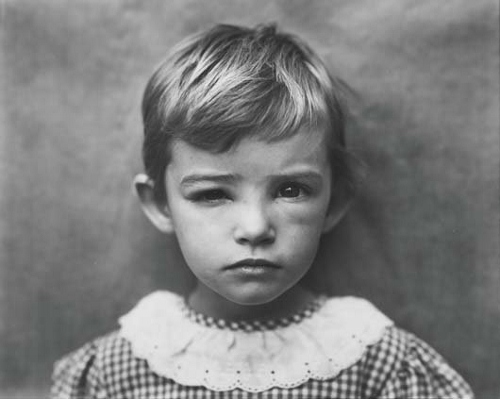
Self-image is a tricky thing. I have very specific ideas about what type of person I am, often connected to minor details of my appearance or personality. I'm a book reader. I'm a long hair person. I'm a bit loud. I'm usually the youngest person in a group.

Not big, earthshaking revelations, but still important facets of myself. Things you don't mess with. It creates cognitive dissonance. I find that concept fascinating- cognitive dissonance. It's that feeling you get when reality clashes with your beliefs. Sometimes, you don't even recognize it's happening, you just change your beliefs so that you don't feel uncomfortable anymore. You rationalize.

All through grade school I was almost a year younger than my classmates. I assumed that as soon as I made it to college, everyone would be my age again. In college, my friends were usually 2-3 years older than me. When I moved and started staying home with my kid, my friends were still 2-3 years older than me, sometimes 6-7 years older. I am so used to this pattern in my life that I am genuinely shocked when I discover people in my life who are younger than me. I feel that I have to comment on how unusual it is that someone is younger than me. Now, I always have to think about what my actual age is, because once I realized I was too old to be precocious, I didn't want to think my age mattered anymore, and I refused to keep the information at the front of my mind. I didn't want it to have any part of my identity. Rationalization.

There can be relief in letting go of labels that no longer fit. I have had very long hair for most of my life. And for most of my life, long hair was less work than short hair. It was another label, a self image, an identity. I decided to quit cutting my hair to mid-length and grow my hair to Rapunzel length. And I hated it. At no point in my life have I ever complained about my hair so much. So I cut it all off. And it feels really good. There is no reason to hold on to the long hair girl. She's different now, and that's just fine.
3.04.2013

Failing

from thisisnthappiness.com

Yesterday, I turned on NPR just in time to catch "On Being with Krista Tippett," a show I don't usually find that interesting, but her interview with Father Greg Boyle was interesting, inspiring, and funny, and I highly recommend listening to it. Fr. Boyle discusses his ministry in gang intervention programs in Los Angeles, and gives much food for thought.

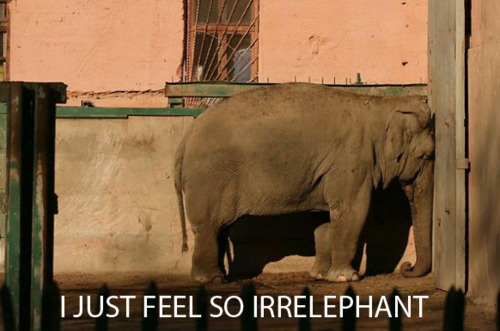
Midway through the interview, Fr. Boyle says "anything worth doing is worth failing at." I almost couldn't concentrate on the rest of the interview, because that comment affected me so much. I am slowly learning how to fail. The phrasing is off, I suppose. "Learning to fail" is a facile phrase that doesn't communicate everything I mean. I am learning that I shouldn't let the fear of failure or even the certainty of failure prevent me from trying. Courage is persevering despite your fears. I am learning that some failures don't have to be permanent. There is wisdom in realizing that some failures are due completely to timing. I am learning to forgive myself for my failures. It is prideful to expect more of yourself than you would of others, and pride is a deadly sin.

At one point in my life I successfully trained myself out of worrying. Perhaps too successfully, but that is a story for another day. I had a permanent case of what I call "hamster brain." You know the feeling- you stay awake at night because you are continually running through a to-do list, rehearsing a difficult conversation, anticipating disaster. I trained myself to put those things out of my mind. If something that caused me anxiety popped into my head, I would ask "Can I do something about this right now?" If I could, even if "something" was just writing down a plan, I would do it- right then. If I couldn't, I would force it out of my mind in a sort of meditative exercise. It would come back later, and I could do the same evaluation. It was a great mental exercise, and it did add a peaceful quality to my life. I am now realizing that the anxiety is back, but it has changed form. Rather than worrying about things I need to do, I worry about things I should have done. Except "should have done" is an arbitrary rubric that only I have control over, and this is where the forgiveness comes in. When my anxiety manifests, my new conversation should be "Can I do something about this right now? No? Then I forgive myself. I will try again later." With a Hail Mary because it never hurts to ask for help.

Notice "should be." I will also be working on forgiving myself if I struggle with this.

2.25.2013

History

I decided when I started blogging again that I would make things a little more manageable. Three days of posting rather than my initially overenthusiastic five days. A set schedule of content so I never had to sit down listlessly at the computer and stare hopelessly into the void of the internet waiting for The Best! Post! Ever! I even had a backlog list of post ideas waiting for me from my initial foray into blogging. That list is (ahem) eighteen months old. And it is weird.

I am not someone who can keep a journal. The thought of reading old posts makes me cringe. When I found my junior high/high school journal I burned it. That isn't as melodramatic as it sounds- I threw it in the woodburning stove with some other paper trash when I was cleaning out my closet in my parent's house. I don't like looking back and seeing who I was. Rather, I don't like looking back and seeing who I really was. I like reminiscing and comparing my current accomplishments to my prior self. I don't like reminders of what a different person I was. I don't like reading a journal and feeling contempt at the navel gazing combined with the discomfort of realizing that the stranger's diary I am reading is mine.

The list is a diary of sorts. A collection of articles and pictures and quotes without any context. It makes it easier to deal with than a journal, but that is because it contains none of my own thoughts. I've stumbled across this artifact of my own recent history, and it means nothing. Half of the content is on topics I no longer care about, and the other half makes me wonder what I cared about when I saved them. I don't know who the person was that saved those scraps. And yet- I've also written three posts inspired by that list on topics that still move me.

Should this unease motivate me to journal, or dissuade me? Is it better to forget your past foibles, or should you continually remind yourself of your mental history?

2.18.2013

Children

"It is a wise father who knows his own child."
       -William Shakespeare (from The Merchant of Venice, Act II, sc 2)

Parenting a child is such an ordinary and surreal experience. You realize you are your parents, whether that is a good thing or a bad thing. You realize how incredibly smart and capable your parents were/are. You realize that your parents must have also had moments of doubt, wondering if they really knew what the hell they were doing trying to raise a child into a responsible adult. And then you realize that being a parent is such an ordinary thing. An ordinary thing that never feels anything less than extraordinary.

Once you get past the baby stage, you realize that this tiny human is actually another person. Someone with dreams and desires and fears and passions. It's disconcerting, they've been so predictable until now. Crawling, eating, walking, talking. Oh the talking. The joy and bane of my existence is the talking. The point is, once they start talking, they can tell you their internal monologue, and you realize how much you have missed. You assumed that they thought the same things you did, because they are your mirror, your reflection, with a doubly familiar face and your words and actions. Until one day, they say something new. Something you never thought or said or did. And you realize you will only ever know them as well as you can know another person.

2.04.2013

Education

“Our whole theory of education is based on the absurd notion that we must learn to swim on land before tackling the water.” — Henry Miller

If you are attempting to learn something, you should spend a lot of time doing the actual thing. I spent a lot of time in college finding ways to jump in the water, and I was always annoyed at how many of my classmates were content to go through the motions on land. My personal manifesto is that the goal of anyone's trip through formal education- whether that education stops at high school or with a Ph.D- should be to learn how to learn. The second part to that manifesto is that you should never stop learning.

How do you teach yourself to learn? You can start by trying. Try anything. Do it wrong. Find out why you did it wrong. Try it again. Let yourself be curious. When a small curious thought runs through your head, follow it up. Follow your curiosity wherever it leads you.

See a complicated recipe online? Go for it! Use your Google Fu to find out how to make a macaron! Want to rock climb? Find a climbing group- actually, find any group you want to start a new hobby. Passionate people will never be annoyed at a beginner, they will be overjoyed to find someone who wants to share their passion. Try anything you like, and just know that if you didn't like the results, you only have to learn a little more and try again. Or not. If you hated something, you never have to do that again. I think that should be on my family's crest: "Well, we never have to do that again." It sounds like a negative, closed-minded sentiment, but it is the opposite. It means that we tried. And we learned something.

1.28.2013

Imperfection


"Wow, I wish I had that life." That was a thought I caught floating through my brain sometime last year after watching an episode of Mad Men. ( I have not seen the latest season, shut up, I only have Netflix.)

What an odd thought, considering how miserable those characters are. When I actually examined the thought, I realized that what I wanted was the outward perfection of their lives. Part of the popularity of the series is, I think, the crisp perfection in the appearances of the workplace, the homes, the clothing. I think I want that type of perfection in my life. "I would be so happy if my house, my makeup, my clothes were that perfect," I think to myself, despite previous experience not validating that claim.

A facade over a dilapidated foundation is not perfection. Life is a little messy. Actually, life is really messy if you spend 90% of your time with a 2-year-old boy. Perhaps, rather than striving for an artificial perfection, we only need to refocus our attention on an organic, messy beauty. Or, at the very least, look past the mess to focus on the beauty. Remind me of that next time the sticky little kid leaves a slime trail on his way to take a bath.


11.01.2011

Be nice. To everyone.


Do you like reading pop psychology? I found a new favorite website for you! Here is: You Are Not So Smart.

I love pop psychology, it makes me feel like I've just learned a secret way to solve the entire world, when I should really take it like this website shells it out: Sorry dumbass, you can't do anything because your brain got in the way.

The life lesson I learned today was from the post titled "The Benjamin Franklin Effect." The jist of it is this: You think that you are nice to people you like and mean to people you hate because you are a reasoning creature with a brain. Cause and effect, etc., etc. Problem is, cause and effect probably aren't what you think they are, because your brain is this weird black box that makes you do things you don't think you do. Instead of being nice being the effect of liking someone, sometimes liking someone is the effect of being nice to them. It's the result of "cognitive dissonance" which means the short circuit happening in your brain when you do something that you don't believe in. Your brain can't handle the incongruity of action and belief, so it changes the belief. So you do something nice for someone, and then you convince yourself that you must like them, because you only do nice things for people you like. 

Moral of the story: Be nice to everyone. Life is much easier when you don't have anyone to dislike.

10.31.2011

Childhood Is Rough


This post got me thinking. Go there first and read the first couple paragraphs (at least), then come back. (Wow, that sounded bossy.)

I really am not one of those people that think childhood is so idyllic. Innocent, yes. Idyllic? Do you remember your childhood? Not just the highlights, do you actually remember how it felt to be 5, 8, 11 years old? Take a minute if you must.

Don't you remember being confused by certain "grown-up" things? Don't you remember desperately longing to be just one year older? Don't you remember being so frustrated when grown-ups would tell you "You'll understand later," or "Because I said so," or various other phrases used when you don't know how to explain the world to someone with no experience? Don't you remember how much work it was just to figure out how the world works?

I think most individuals have forgotten exactly how it felt to be a child by the time they have children themselves, which isn't anyone's fault. You don't have the same brain that you did back then. However, I think that it is very important to try to remember how difficult growing up is when you are raising your own children; it brings a dimension of empathy to the process. It makes it a little easier to be patient and kind and understanding when you remember your own frustrations and fears and joys as a child. Rather than thinking, "You don't know how easy you have it, you don't have any stress or anything to worry about," take a minute and remember your own silly (now they seem silly) fears and anxieties as a child. Life is never easy. Not even when you are two years old.

6.16.2011

Perfection


Perfection is totally ruining my life. Or rather my overwhelming desire for it is. 

Perfectionism isn’t generally something we complain about in ourselves. It’s usually something we say about other people, as they drive us up the wall with their unreasonable demands and expectations. Well, I make myself crazy. (I’m not discounting the reality that I make everyone around me crazy too- I love you dear husband!)

I almost feel kind of silly writing this post also, because my mind is telling me “Perfectionist? Hah! Look at your kitchen! Do you have any idea what you are making for dinner? Your bed isn’t made! You didn’t call about that thing! And look at your writing- is that really as good as it gets?”

And this is exactly the problem with being a perfectionist- nothing could ever be good enough in your life, because life is never perfect. I blame a lot of my high-strung mentality on my perfectionism:

Inflexibility, because life can’t possibly turn out perfect if I haven’t had enough advance warning to think through and plan out every detail of any move I make.

Irritability, because if anything goes against my internal rubric of perfection, usually small things, (background noise, things out of place, turns of phrase, on and on) I can’t help but fixate on the small imperfection until I snap over another ridiculously small annoyance.

Indecision. I cannot allow myself to attempt or to start something until I have convinced myself that it will have the exact outcome I expect. Usually things as small as calling the cable company. (I did that today, honey!)

And I just realized that I totally unconsciously made a list of the three I’s of my worst personality traits.  

Perfection?


Are you a perfectionist? What is your personal neurosis?

6.11.2011

Thoughts on Reading


This is in direct response to this post by Derek on his blog The Preamble of Thought. (Another newbie blogger. Go look!) Specifically, I really was struck by his comments on reading as escapism, since I view most of my own reading in that light.

I am, and always have been, a voracious reader. Over the past few years, my reading has shifted more and more heavily into the fantasy genre.

Wait! Before you eye roll, hear me out.

The main attractions of this genre for me are that 1) These books are almost always ridiculously long, and they come in series, so I know if I like it I have reading material I will enjoy for a while, and 2) done well, fantasy is completely immersive. You have to suspend all belief and let the story take you somewhere else. It is escapism at its highest.
Of course, reading fiction (non-fiction too, I suppose) can always be escapism, but I find that I don’t prefer to read fiction that is based in the real world or that is striving for realism, and the same goes for TV or movies. When I watch a movie or read a book, I am completely and totally emotionally invested. I am there. I am that character. I am feeling intense, sometimes overwhelming emotion.

Having birthed a child, any time a childbirth scene appears on TV or in a movie (why are they so graphic lately?) I squirm. My husband’s comments on my reaction indicate he thinks I must be remembering physical pain. I am, to some extent, but honestly, that isn’t what I remember or feel when I think of the birth of my son. I can barely remember the physical sensations of that event. What I do feel, even writing this paragraph, is an overwhelming rush of emotion, an intense flood of joy, relief, unbearable protectiveness and melancholy. It isn’t bad feelings, obviously, just overwhelming. I don’t want to feel that way without warning.

I really, really, don’t like Les Miserables. I’ve read both the abridged and unabridged versions, and I never want to think about that story again. Ditto The Good Earth. Or The Red Pony. Why in the world would I ever want to read something that reminds me of exactly what is awful and disheartening and hopeless about the human condition?

However, I can read about some really dark and disheartening and sad and intense things in fantasy. In fantasy, it is always so obvious that these things aren’t connected to you in the real world. As soon as you stop reading, there is no longer any conflict. There is no action you can take that would change any outcome in a fantasy novel, but I am always reminded reading fiction set in this world that there are real people similar to those characters somewhere. They have problems, they are dealing with life, they are making mistakes, they have their own triumphs.  

I’m doing all that too, and I don’t want theirs.


Why do you read?